Never laugh at live dragons
Never laugh at live dragons is a proverb that crystallizes one of the most dangerous lessons Bilbo Baggins learns during his quest. The saying originates in a moment of reckless bravado deep inside the Lonely Mountain, when the hobbit, having just discovered the bare patch on Smaug's jewel-encrusted belly, cannot resist a parting taunt. After exchanging riddling boasts with the dragon and extracting the crucial information about his weak spot, Bilbo adds as a final shot: "Well, I really must not detain Your Magnificence any longer... And so do burglars." The dragon's response is immediate and devastating: Smaug spouts terrific flames after him, and though Bilbo flees up the tunnel, the ghastly head of the dragon thrusts against the opening behind him, sending fire and vapour to pursue him. He is nearly overcome, stumbling blindly in great pain and fear. It is in the aftermath of this narrow escape, as he recovers from his scorches and realizes the magnitude of his error, that Bilbo speaks the words to himself: "Never laugh at live dragons, Bilbo you fool!" He adds that it became a favorite saying of his later, and passed into a proverb.
Origin and Context
The proverb is born from a specific failure of judgment. Bilbo had been feeling rather pleased with the cleverness of his conversation with Smaug, during which he had used riddling talk to avoid revealing his proper name and had successfully goaded the dragon into showing his unprotected chest. But his mistake at the end—the parting shot about burglars—shook him into better sense. The incident occurs in Chapter XII, "Inside Information," after Bilbo has already made two dangerous journeys into the dragon's lair. The physical cost is tangible: the hair on the back of his head and his heels is singed and frizzled right down to the skin, and it is a long time before it grows properly again. The psychological cost is the realization that even a successful burglar, armed with an invisible ring and a clever tongue, cannot afford to mock a living dragon.
Thematic Significance
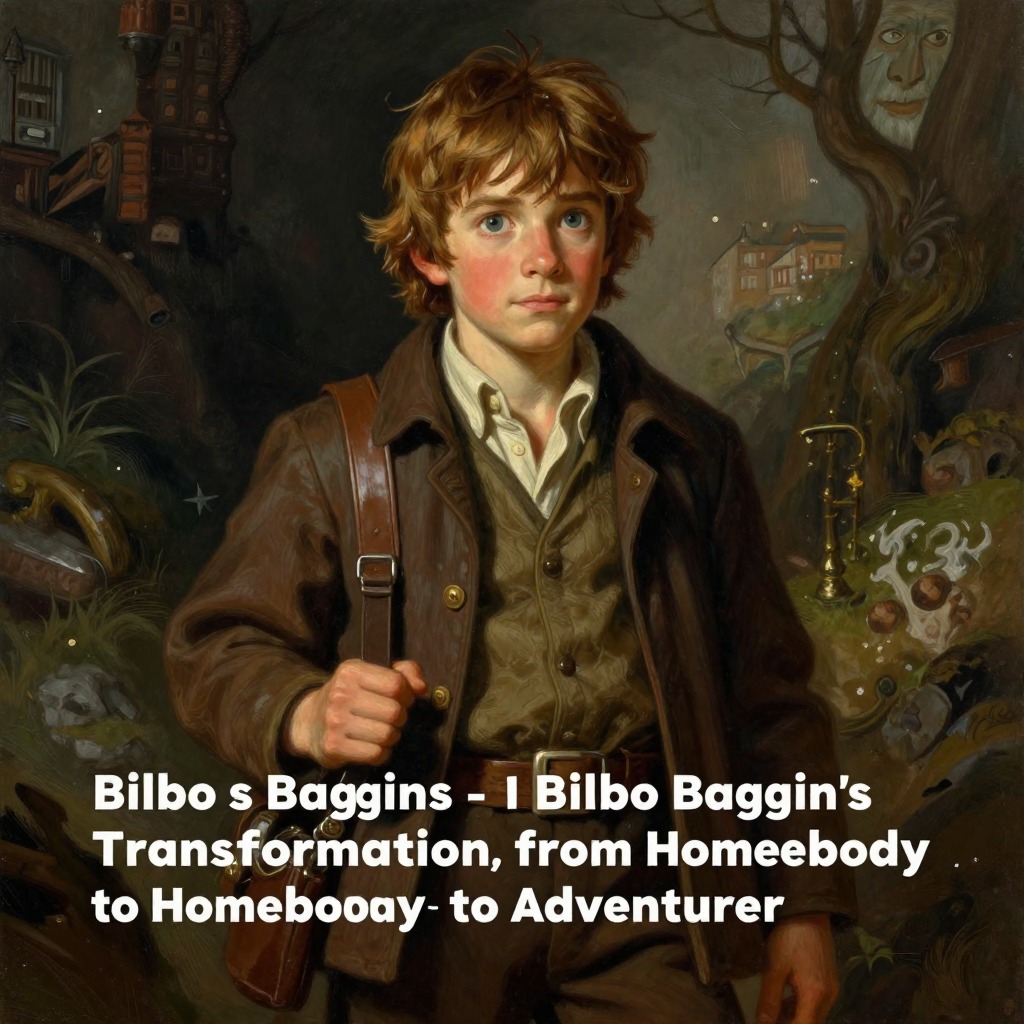
The saying encapsulates a central theme of Bilbo's transformation throughout The Hobbit. From the beginning, Bilbo is a comfort-loving hobbit who surprises even himself by his resourcefulness and skill as a burglar. The Tookish side of his nature, inherited from his mother Belladonna Took, often impels him toward adventure and boldness, while the Baggins side urges caution and respectability. The moment he laughs at Smaug represents the Tookish side overreaching, and the proverb he creates is the Baggins side reasserting its hard-earned wisdom. It marks a turning point in his character development: he is no longer the naive hobbit who left Bag-End without a pocket-handkerchief, but a seasoned adventurer who understands that even victory carries risks. The saying also reflects the broader narrative lesson that dragons, like the dangers of the Wild, are not to be trifled with—a truth that Bilbo carries with him for the rest of his life.
Legacy and Use
The proverb becomes a lasting part of Bilbo's personal philosophy. In the years after his return to Bag-End, he remains an elf-friend and has the honour of dwarves, wizards, and all such folk as ever pass that way, but he is no longer quite respectable. He takes to writing poetry and visiting the elves, and though many shake their heads and touch their foreheads, he remains very happy to the end of his days, and those are extraordinarily long. The saying "Never laugh at live dragons" is one of the pieces of wisdom he carries from his adventure, a private reminder of the thin line between cleverness and folly. It also serves as a narrative device that underscores the book's recurring motif of the unexpected consequences of even the most successful actions, and the importance of humility in the face of overwhelming power.